
What is Montessori Education?
“Education should not limit itself to seeking new methods for a mostly arid transmission of knowledge: its aim must be to give the necessary aid to human development.” – Maria Montessori, From Childhood to Adolescence
- Have you have already heard about Montessori?
- Did you know that Dr Maria Montessori’s research and theories apply to human development from conception up to adulthood?
Within every newborn there is enormous untapped potential. This needs a supportive and prepared environment to be fully expressed. A child’s life experiences directly impact how much of this potential they can achieve.
- The first 6 years of life form each child’s fundamental capacities: physical, intellectual and emotional.
Montessori education is designed to support the natural development of human beings; not just in nursery but right through secondary school and university too!
Intrinsic aspects of quality Montessori education are:
- Clear and logical thinking, concentration and perseverance: a child can learn to read and to write, understand mathematics, and research extensively about their interests and our world.
- Communication, empathy and collaboration: a child can consider the needs of others and work together to find solutions for social problems.
- A strong character: every child is empowered to make a positive contribution to society as a whole.
- Self-motivated and a love of learning: a child can think flexibly and creatively to achieve their potential.
Traditional education:
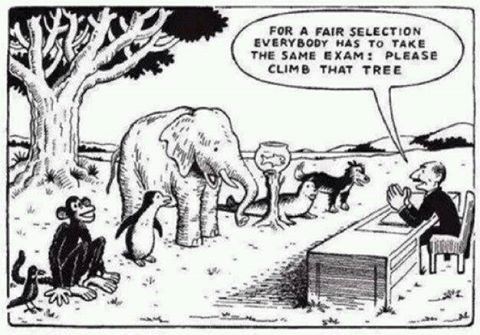
- Children learn facts dictated by an adult-led curriculum, and are tested to see how much they have retained.
- Their ability to retain information is given a test score and used as a measure of academic success.
- The teacher is active and controls each lesson with a plan. The child is the passive receiver of information.
Montessori education:
- The teacher’s role is to guide rather than teach. The curriculum is child-led for all ages. Each child becomes an active, independent learner and the teacher is a facilitator.
- Children are given the freedom to develop according to their own unique timetable. As a result, they are able to reach each developmental milestone with self-assurance.
- Children are actively engaged in their own development. They are supported to grow into confident, socially aware, empathetic adults who are contributing members of society.